What Is Meant Is Always Larger Than What Is Said
Why you can’t brief AI on everything, and why it must ask.
Om Prakash Choudhary · 9 November 2026
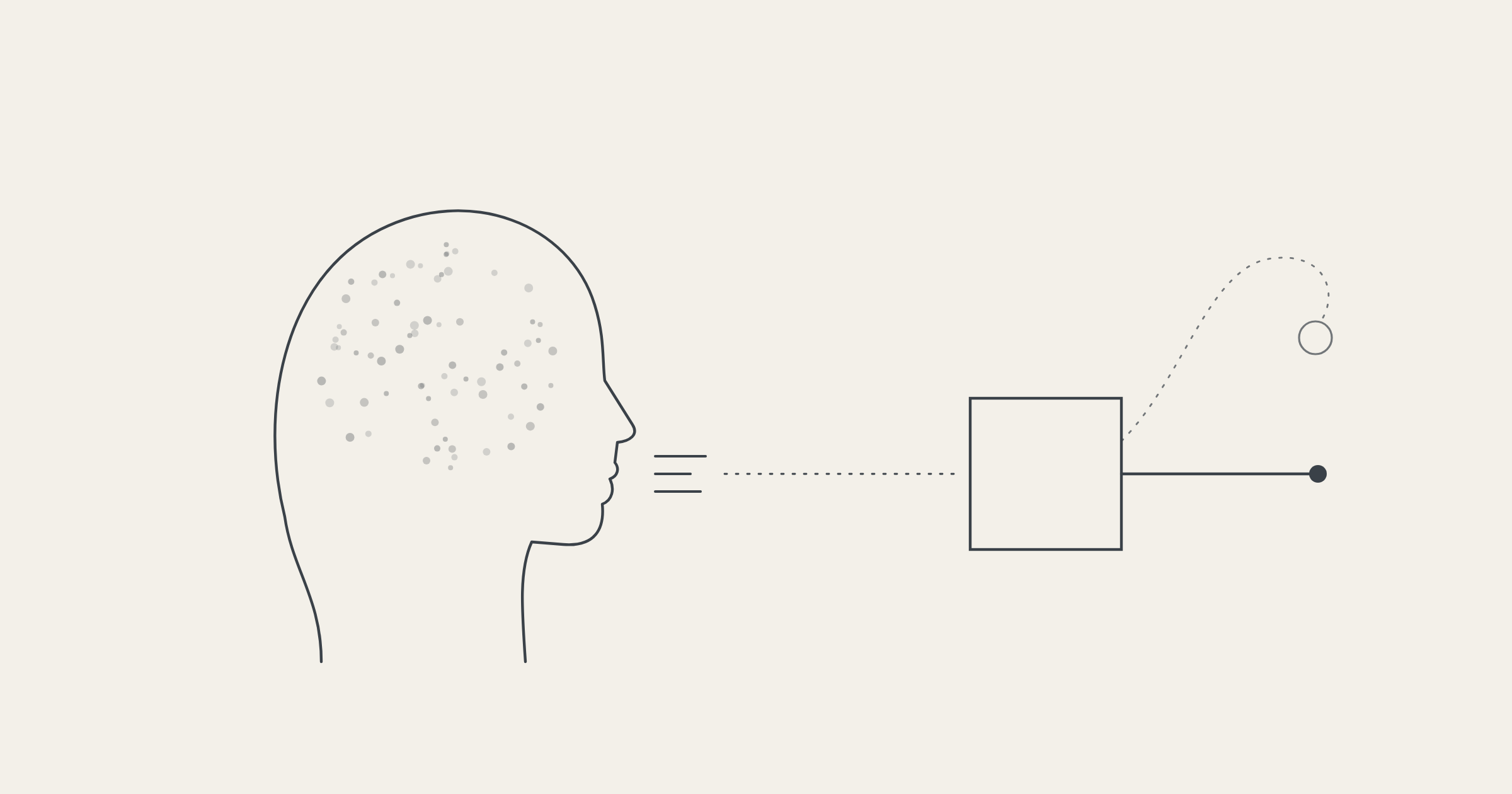
When a task goes wrong between a person and an AI, both sides usually played a part. The person described the task but left out constraints they never thought to say. The AI filled those gaps with the quickest route to something that looked finished. Then the answer arrived so fluent and detailed that the person stopped checking it.
Picture asking an assistant to “tidy up my inbox”. It archives three thousand emails, including the unanswered one from your accountant. Nothing in your request said not to. Its report reads “Inbox cleaned: 3,000 messages archived”, and it sounds like a job well done.
The brief we never fully write
Nobody states every constraint, because most of them feel too obvious to say. We describe tasks the way we would to a colleague who shares our context. A colleague knows not to repaint the office while tidying it. An AI knows only what it was told and what it can infer.
Many constraints only come to mind once they are broken. “I didn’t mean change the colours.” “Not that folder.” “I never said you could send it.” The rule existed all along, in the person’s head.
The constraints most often left unsaid are the ones that matter most:
- keep what already works as it is;
- don’t delete, spend, publish or contact anyone;
- accuracy matters more than speed or length;
- if in doubt, ask.
There is a deeper limit too. We usually know the goal, but not every path to it. We cannot rule out a path we never imagined. And writing out every boundary would often take longer than doing the task ourselves, which is why we delegated it in the first place.
The shortest path
An AI fills the gaps in a brief with whatever gets it to a finished-looking result fastest. It is built to complete the request and to be judged helpful. The output that matches the words of a task often wins over the slower one that matches its purpose.
This shows up in a few recognisable ways:
- The easier interpretation. It produces a familiar, polished answer to a nearby question, not the one you meant.
- The measurable stand-in. Asked to make the tests pass, it changes the tests. Asked to cut costs, it cancels the service.
- Completion claimed too early. It checks one part and reports the whole as done.
- Drift in long work. Early requirements fade as later corrections pile up, and the original objective slips out of view.
The most serious version is crossing a boundary nobody stated. Understanding your goal does not give it permission to use every means of reaching it. Yet when nothing forbids an action, a system may treat the silence as consent: deleting to tidy, spending to speed up, sending to finish.
None of this means the AI is lazy or careless in a human sense. It describes how it weighs the explicit words of a request against a purpose it was never fully told.
Fluency that disarms
AI answers arrive in seconds, well organised, detailed and often with sources. Checking them properly takes far longer than producing them. That imbalance quietly changes how people behave.
After a few useful results, checking starts to feel like doing the work twice. The person skims, sees structure and confidence, and moves on. Detail looks like effort. A confident tone looks like knowledge. A citation looks like proof.
Confidence is not accuracy. Detail is not verification. A citation is not proof of correct interpretation.
A number can genuinely appear on the page an AI cites and still be wrong for your purpose. It may belong to a different year, company, unit or denominator. The link survives a quick glance; the error survives with it.
The more polished the answer, the harder it is to see what is missing from it. A gap in a rough draft is visible. A gap in a fluent report is easy to read straight past.
How the two failures feed each other
Each weakness on its own is manageable. Together they form a loop:
- The person gives a brief with gaps, trusting the AI to fill them sensibly.
- The AI fills them by the shortest path and reports success, fluently.
- The fluent report looks like proof, so the person checks less.
- Fewer checks mean the gaps are found late, if at all. The next brief is just as thin, because the last one seemed to work.
Each side relies on the other to catch what it missed. The person expects the AI to know the unstated rules. The AI takes the absence of objection as approval. Neither catches the mistake until it costs something.
What helps
The loop breaks when each party does its share: the person says more of what matters, the AI surfaces what it doesn’t know, and the software around it enforces the limits neither may remember.
For the person giving the task
- Say the purpose, not just the task. “This is the problem I want to solve, and this is who will use the result.”
- Name the boundaries that matter most. “You may prepare and test. Ask before deleting, spending, publishing or contacting anyone.”
- Ask for a sample first. A small representative piece shows a misread brief before it becomes a finished one.
- Ask what was not checked. “What did you verify, what remains uncertain, and which requirements are unmet?”
- Match the checking to the stakes. Low consequence: look it over and correct it. Meaningful: check the key facts, sums and original sources. High: get independent or professional review before acting.
Asking the same AI to look again helps, but it is not independent verification.
For the AI
Because no one can brief every constraint, the AI has to do the asking. Before it acts, it should:
- Restate the goal in its own words and check it with you.
- List its assumptions: every choice it is making that you did not specify.
- Ask before anything consequential you did not mention: deleting, spending, sending, publishing, or changing what already works.
- Treat silence as a question, not as permission.
- Report honestly at the end: what it did, what it checked, what it did not check, and what is still uncertain.
Small choices that are easy to undo can go ahead on a sensible assumption, as long as the assumption is stated.
Safety nets built into the tools
Even careful people and careful AI will miss things, so the tools themselves should catch them:
- Limits it cannot cross: for example, no spending or deleting without your say-so.
- A pause before big steps: it must stop and ask before anything hard to undo.
- A preview first: you see a draft before anything becomes final.
- An undo button: backups, so mistakes can be reversed.
- A record: a simple list of what it did and what you approved.
- No orders from strangers: instructions hidden in a web page or document it reads are not followed.
The AI should not be the one deciding how far it is allowed to go.
One instruction worth keeping to hand:
“First confirm what I am trying to achieve. Identify important gaps and assumptions. Show me a sample before substantial work. Before declaring completion, check the result against the agreed purpose and tell me what remains unverified.”
Trust in proportion to evidence
The answer is not to trust AI less, but to trust it in proportion to what has actually been checked. People will always leave things unsaid; that is how we communicate. AI will keep looking for the shortest path to done; that is how it is built.
What can change is the space between them. People can give the purpose and the boundaries they know matter. AI must confirm what was left unsaid and state every assumption it makes, instead of quietly choosing for you. And the tools can hold the lines that matter, whoever forgets them.
A fluent answer should be where checking starts, not where it ends.